Ten years ago, African Leadership University welcomed its first cohort of 141 learners with a bold ambition: to develop ethical and entrepreneurial leaders capable of transforming Africa.
Today, that ambition has grown into a pan-African ecosystem of students, alumni, entrepreneurs, educators, and partners working across the continent and beyond.
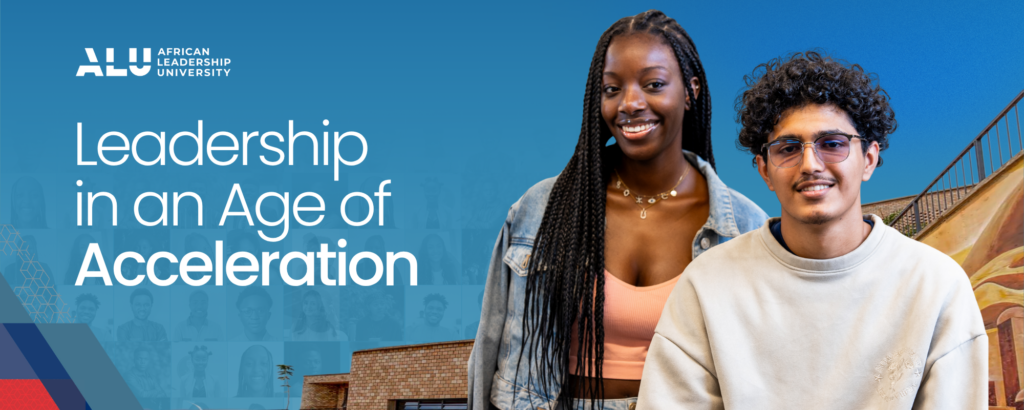
ALU’s 10-Year Impact Report, Leadership in an Age of Acceleration, reflects on this journey and the people driving it forward. Behind the report’s numbers is a larger story about what becomes possible when education is connected to purpose, practical experience, and the challenges shaping Africa’s future.
Here are three things the report reveals about ALU’s first decade of impact.
1. Learning has the greatest impact when it extends beyond the classroom
At ALU, education is designed to prepare students for the world they will enter after graduation. That means giving learners opportunities to test their knowledge, build professional networks, and contribute to real organizations while they are still studying.
Since 2015, ALU students have secured 4,210 internships across sectors including technology, healthcare, venture capital, research, community development, and social enterprise. In 2025 alone, 972 students completed internships, with women accounting for 58% of placements.
These experiences do more than strengthen a résumé. They help students understand how their skills can be applied to real challenges.
During her internship with the Kilimani Project Foundation in Kenya, ALU student Amina Bizimungu Iradukunda contributed to initiatives focused on youth employment, mental health awareness, and social cohesion. The experience strengthened her leadership and project management skills while expanding her understanding of community-driven development.
Software Engineering student Bosco Ishimwe applied his technical knowledge as a web developer at Toast Group, working across programming, database design, API integration, and user testing. He also volunteered at Nyabiheke Refugee Camp, reinforcing the connection between technical expertise and community impact.
Their experiences reflect a central principle of ALU’s learning model: leadership is developed through action.
2. ALU graduates are not only entering the workforce. They are expanding it.
Africa’s growing working-age population makes job creation one of the continent’s most urgent priorities. ALU’s first decade demonstrates the role that entrepreneurial education can play in responding to that challenge.
To date, ALU has supported 1,617 entrepreneurs who have launched 1,460 ventures. Together, these ventures have created more than 46,000 jobs and raised over $22.9 million in capital.
The significance of these numbers extends beyond individual business success. Each venture represents the possibility of solving a problem, serving a community, and creating opportunities for others.
Many of these ideas begin while students are still at ALU. Nigerian Software Engineering student Helen Ugoeze Okereke developed L-Guard, an IoT-powered system designed to detect road accidents and improve emergency response, after participating in a hackathon. The venture has since built and deployed functional devices, received regional recognition, and secured significant funding.
Another student-founded venture, MediXR, is using immersive technology to expand access to medical training. What began as a hackathon project has trained more than 150 students and healthcare professionals and secured over $65,000 in funding.
These ventures show what can happen when learners are encouraged to see Africa’s challenges not only as problems to study, but as opportunities to build.
3. A pan-African education creates a pan-African network
ALU began in 2015 with 141 learners at one campus in Mauritius. By 2025, 5,738 learners had enrolled across the decade, and the university’s community included more than 40 nationalities.
This growth matters because some of the most valuable learning happens between students.
Learners encounter perspectives shaped by different countries, cultures, industries, and lived experiences. They form relationships that can grow into cross-border ventures, professional collaborations, and lifelong networks.
That community is also becoming more inclusive. Female enrollment grew from 69 learners in 2015 to more than 540 in 2025. Since 2021, ALU has enrolled a cumulative 95 students living with disabilities and expanded access for refugees, asylum seekers, and internally displaced learners.
This diversity is not separate from ALU’s approach to leadership development. It is essential to it. Leading across a complex and interconnected continent requires the ability to listen, collaborate, and build alongside people whose experiences may be different from one’s own.
The next decade begins now
ALU’s first decade has been defined by growth, experimentation, and a determination to reimagine what higher education can make possible.
Its impact can be seen in thousands of internships, ventures launched, jobs created, and careers built. But it can also be seen in the confidence of a student testing an idea, the community strengthened by a new solution, and the opportunities created when one graduate opens a door for others.
As technological change accelerates and Africa’s next generation prepares to enter the workforce, the need for ethical, entrepreneurial, and mission-driven leadership will only grow.
The first ten years have shown what is possible. The next chapter is about taking that impact even further.
Explore ALU’s 10-Year Impact Report, Leadership in an Age of Acceleration, to discover more stories from the students, alumni, and partners shaping Africa’s future.