Climate and conservation are no longer defined solely by urgency. Increasingly, they are being shaped by opportunity, as new models, technologies, and businesses emerge across the continent and beyond. People are no longer asking whether these challenges matter, but who is prepared to work within them.
The Laikipia Field School offers one answer. Set in one of Kenya’s most ecologically diverse regions and part of ALU’s signature immersive experiences, the program places students within the systems shaping conservation today. Over the course of the experience, they move between conservancies, research centres, and community spaces, engaging directly with the realities of wildlife preservation, land use, and local livelihoods.
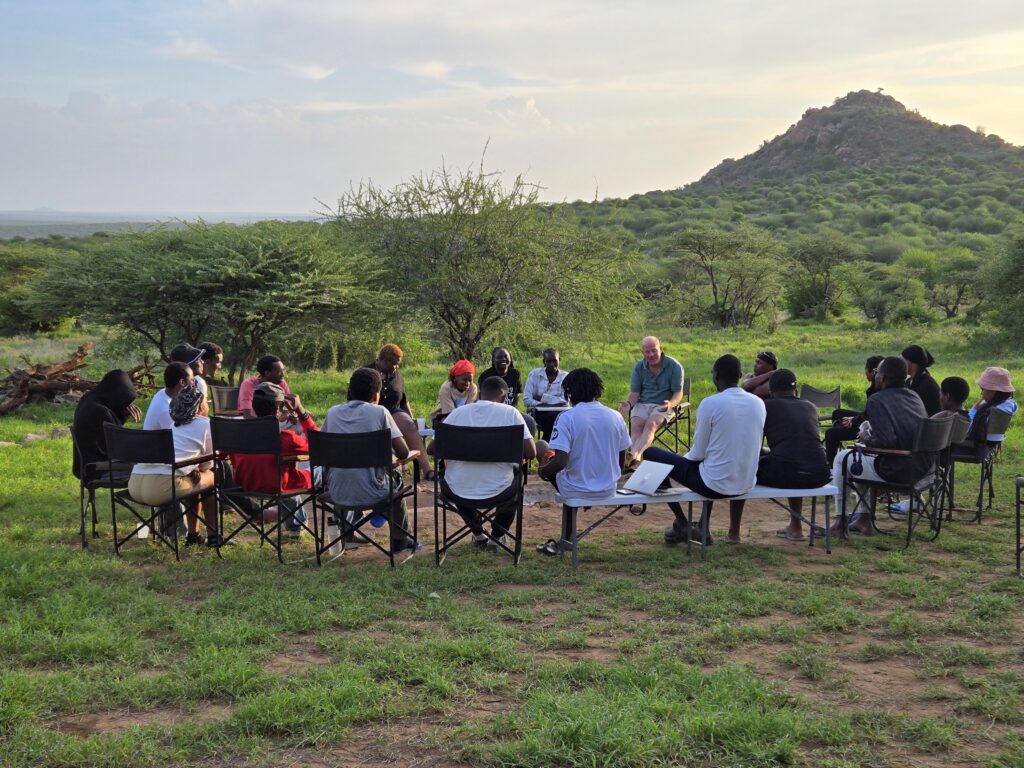
Rather than learning about conservation from a distance, students work alongside rangers, researchers, and community members, gaining a clear view of how decisions are made and what it takes to operate in these environments. For many, that exposure becomes the starting point for the problems they go on to solve.
Learning on the Ground
Based at Male Conservancy, students are introduced to the wildlife economy through daily, hands-on engagement with both the land and the people who manage it. In the Laikipia Field School, conservation isn’t a fixed model; it’s something negotiated in real time, shaped by changing environmental conditions, limited resources, and competing priorities.
Through practical, on-the-ground activities, students engage in approaches such as planned grazing and water resource management, building a clearer understanding of how decisions are actually made. And with species like Grevy’s zebras, black rhinos, and African wild dogs present, the work feels immediate. This work isn’t theoretical; it’s a direct encounter with the natural world and what’s at stake to preserve it.
Moving Through the Landscape
The program extends beyond a single site. Over the course of the experience, students move between Lolldaiga Hills Ranch, Ol Jogi Conservancy, Mpala Research Centre, and the Twala Cultural Community, encountering distinct approaches to conservation shaped by different histories, priorities, and pressures.
At Mpala, the focus often centres on research and data, with scientists tracking wildlife and analysing ecosystems in real time. At Lolldaiga and Ol Jogi, attention shifts to land management, where decisions around grazing, fencing, and resource use carry immediate consequences. At Twala, conservation is closely tied to community, culture, and livelihood.
Moving between these spaces makes one thing clear: there is no single model. Conservation is a system of trade-offs, decisions, and constant adaptation, shaped by the realities of each place in which it is practised.
Inside the Industry
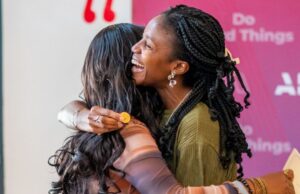
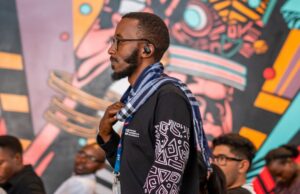
Another key moment in the program comes at the Business of Conservation Conference. For many students, it’s the first time they are placed inside the conversations shaping the sector, not just learning about them from a distance. Conservation here is discussed as it is practiced: as an industry shaped by financing models, policy decisions, and long-term strategy.
Some students take on roles within the conference itself, volunteering alongside organizers, moving between sessions, and engaging directly with speakers and practitioners. The shift is subtle but significant. They are no longer just observing the field, but beginning to operate within it.
The program also includes a meeting with Rwanda’s High Commissioner to Kenya, H.E. Ernest Rwamucyo, which introduces a cultural and policy dimension to these conversations and situates conservation within a broader landscape of Pan-African collaboration and decision-making.
From Observation to Application
The field experience concludes with students developing and presenting their own responses to the challenges they have encountered. Drawing on their time in Laikipia, they work across areas such as wildlife mapping, conservancy operations, carbon projects, land management, and data-driven approaches to nature recovery.
Across ALU, this progression is already visible. What begins as exposure to a system often develops into something more applied, as students begin to identify where they can contribute and how they might build within it. In areas such as conservation and climate, this has increasingly translated into ventures and solutions shaped by the same environments in which students first engaged with these challenges.
We recently explored this trend further in The Green Economy: What ALU Students Are Building Across Africa, where we discuss how, for ALU students and ALUmni, sustainability is approached not only as a global challenge, but as a space for innovation and economic opportunity.
The Laikipia Field School is one expression of how learning takes place at ALU.
Rather than separating theory from application, students are placed in environments where they can observe, test, and respond in real time. What they take away is not only knowledge, but a clearer sense of how systems work and where they can act within them.
That approach carries forward. The same exposure that begins in places like Laikipia continues into how students engage with areas such as conservation, climate, and the green economy, not just as problems, but as spaces to build, grow, and innovate.
If learning by doing interests you, apply for our next intake.