
Some of the most important lessons in health care cannot be learned in a classroom. Understanding how health systems work requires more than studying theories or analyzing case studies. It requires engaging with the people, institutions, and communities working every day to improve health outcomes.
At African Leadership University (ALU), this philosophy is brought to life through the Centre for Health Innovation and Impact (CHII), under ALU’s Centres for Reimagined Africa. The center brings together students, researchers, practitioners, and partners to tackle some of Africa’s most pressing health challenges through research, innovation, and experiential learning.
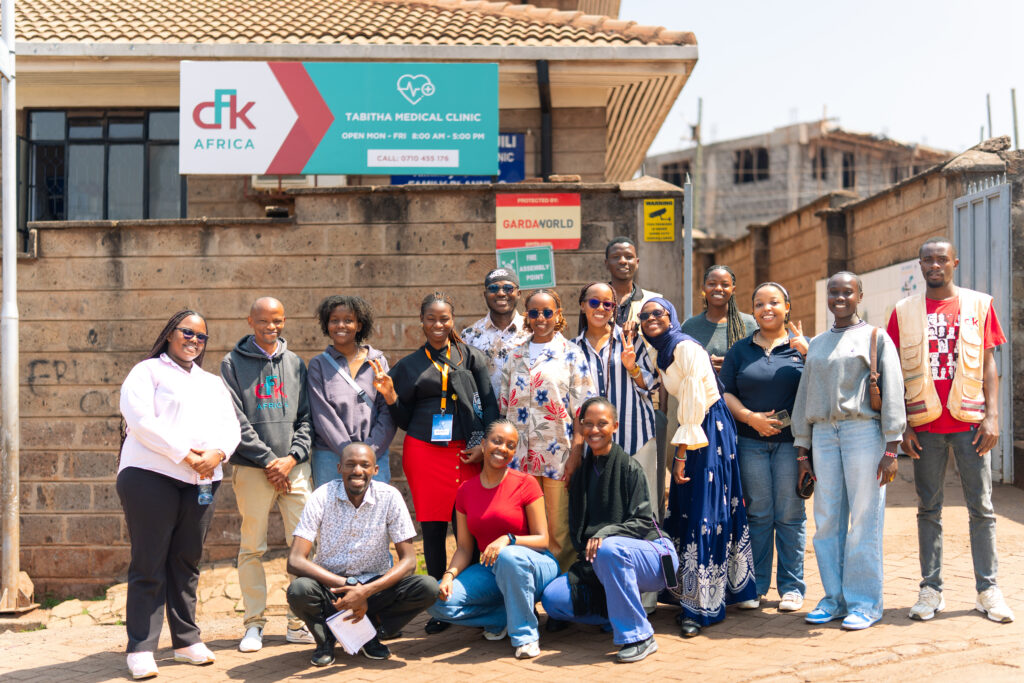
One of the ways CHII puts this approach into practice is through Signature Immersive Experiences (SIEs). Designed to bridge the gap between academic learning and real-world application, SIEs give students the opportunity to step inside the systems they are studying. This year’s Health SIE in Kenya immersed students in one of Africa’s most dynamic health innovation ecosystems, with visits to organizations including APHRC, CARE Kenya, Food4Education, CURE Kenya, Bena Care, CFK Africa, Moi University, Dot Glasses and DPE. Across two weeks, students explored how research, entrepreneurship and cross-sector collaboration are shaping health care delivery across the country.
Learning Beyond the Classroom
The first stop on the Health Student Immersive Experience took students to the African Population and Health Research Center (APHRC) in Nairobi, a leading African research institution that generates evidence to inform policy and improve health outcomes across the continent. Alongside its research, APHRC is committed to strengthening Africa’s research ecosystem by supporting students and early-career researchers to produce evidence that can shape decision making.
The visit challenged students to think differently about the role of research in health innovation.
During a discussion with APHRC researchers, Samuel Babalola, an ALU Rwanda student, raised an important question: How can African research move beyond publication to inform better policies and decisions, when research produced on the continent is often undervalued?
For Helen Okereke, also an ALU Rwanda student and founder of a health venture, the visit reinforced the importance of evidence in building effective health solutions. Seeing how APHRC translates research into policy and practice offered a valuable perspective on the role research plays in creating lasting impact.
Exploring Healthcare Through the Lens of Social Impact
he Health Student Immersive Experience also introduced students to organizations working at the intersection of health, food security, and community development, including CARE Kenya and Food4Education. Through these visits, students explored how addressing health outcomes often means looking beyond hospitals and clinics to the broader social and economic factors that shape well-being.
The conversations highlighted the importance of listening to the people most affected by a challenge, building partnerships across sectors, and ensuring that innovation responds to local realities.
For Joshua Mulongo, an ALU student developing a health venture in East Africa, the experience reinforced the value of community-centered innovation. Reflecting on the visit, he shared that the SIE had helped him better understand the many dynamics involved in creating solutions that deliver lasting impact within communities.
Designing Health Solutions That Leave No One Behind
The Health Student Immersive Experience also took students to CURE Kenya, a pediatric teaching hospital that provides life-changing surgical care to children living with treatable disabilities while supporting their long-term rehabilitation and inclusion. Beyond medical treatment, CURE Kenya works to restore dignity, expand opportunity, and help children thrive long after they leave the hospital.
For Mathew Avhiokhode, an ALU Rwanda student and co-founder of CARE Bridge, a venture focused on making mobility tools more affordable and accessible, the visit brought his work into sharper focus. Seeing children and families navigate the realities of disability firsthand reinforced the importance of designing health innovations with the people they are intended to serve.
One story stayed with him in particular. Mathew reflected on the journey of a young patient named Bavin, who, after receiving treatment for knocked knees at CURE Kenya, is now studying nursing and plays on his school’s football team.
“These kids are getting back their dignity and also getting the chance to dream bigger.”
— Mathew Avhiokhode, Student, ALU Rwanda
Experiences like these demonstrate why immersive learning is central to ALU’s approach. By engaging directly with patients, clinicians, and organizations working on the front lines of care, students gain a deeper understanding of the barriers people with disabilities face and the importance of designing solutions that are inclusive from the outset. Rather than treating disability as an afterthought, students learn to recognize it as a critical consideration in health research, innovation, and leadership. Seeing these realities firsthand helps future founders, researchers, and policymakers build solutions that are not only innovative, but responsive to the diverse needs of the communities they aim to serve.
Conclusion
The Health Signature Immersive Experience reflects the Centre for Health Innovation and Impact’s belief that the best health leaders are shaped through experience. Alongside initiatives like The Waiting Room Hackathon and HealthX, the program gives students opportunities to engage directly with the people, organizations, and communities transforming health care across Africa.
Through Signature Immersive Experiences, CHII is preparing the next generation of African health leaders to move beyond ideas and build solutions that respond to real-world challenges.