ALU’s approach to reducing inequalities extends beyond student access to encompass an inclusive institutional environment for students, employees, faculty, and professional staff. Through its admissions, recruitment, scholarships, employment practices, student and staff support systems, and institutional culture, ALU seeks to remove financial, geographic, social, and structural barriers that limit individuals from realizing their full potential.
For students, this includes high-achieving, low-income learners; first-generation students; refugees; internally displaced persons; students affected by displacement; persons with disabilities; students from underrepresented communities; and learners from countries where access to future-focused higher education remains limited. ALU’s pan-African learning environment brings together students from diverse nationalities, languages, cultures, socioeconomic backgrounds, and lived experiences.
For employees, ALU is committed to fostering an equitable and inclusive workplace by attracting, developing, and retaining a diverse workforce that reflects the communities it serves. The University promotes fair and transparent recruitment, equal employment opportunities, inclusive leadership, professional development, accessible workplaces, employee well-being, and policies that safeguard dignity, respect, non-discrimination, and equal participation. ALU also seeks to create opportunities for women, persons with disabilities, and individuals from historically underrepresented groups to thrive in academic, professional, and leadership roles.
Reducing inequality is not only about entry into the University. It is equally about belonging, support, progression, and opportunity throughout the student and employee life-cycle. ALU’s work in this area includes inclusive admissions and recruitment, financial aid, employee benefits and wellbeing initiatives, accessibility, mentorship, academic and professional development, career advancement, leadership opportunities, alumni progression, and institutional policies that protect dignity, safety, equity, and equal participation across the University community.

Explore data points, programmes, reports, stories, and resources connected to this goal.
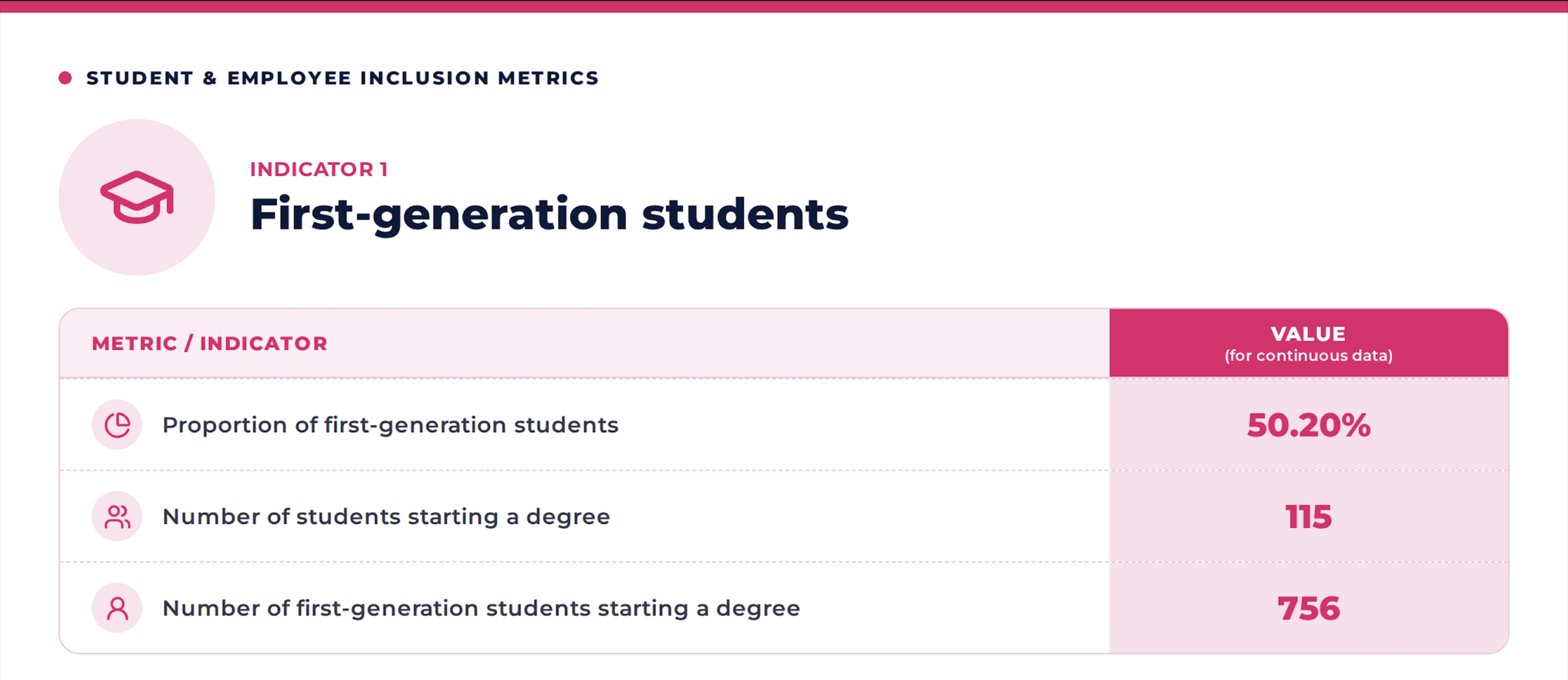
African Leadership University is committed to reducing inequalities by expanding access to higher education for students who have historically had limited opportunities to pursue university education. First-generation learners make up a significant share of ALU’s student community. During the 2024–2025 academic year, 756 students (50.20%) identified as first-generation students. This proportion is slightly higher than the 750 students who reported that they were not first-generation students. Only 77 students did not indicate their first-generation status. This highlights ALU’s success in creating pathways to higher education for students from diverse socioeconomic backgrounds and advancing SDG 10.2, which calls for the social, economic, and political inclusion of all.
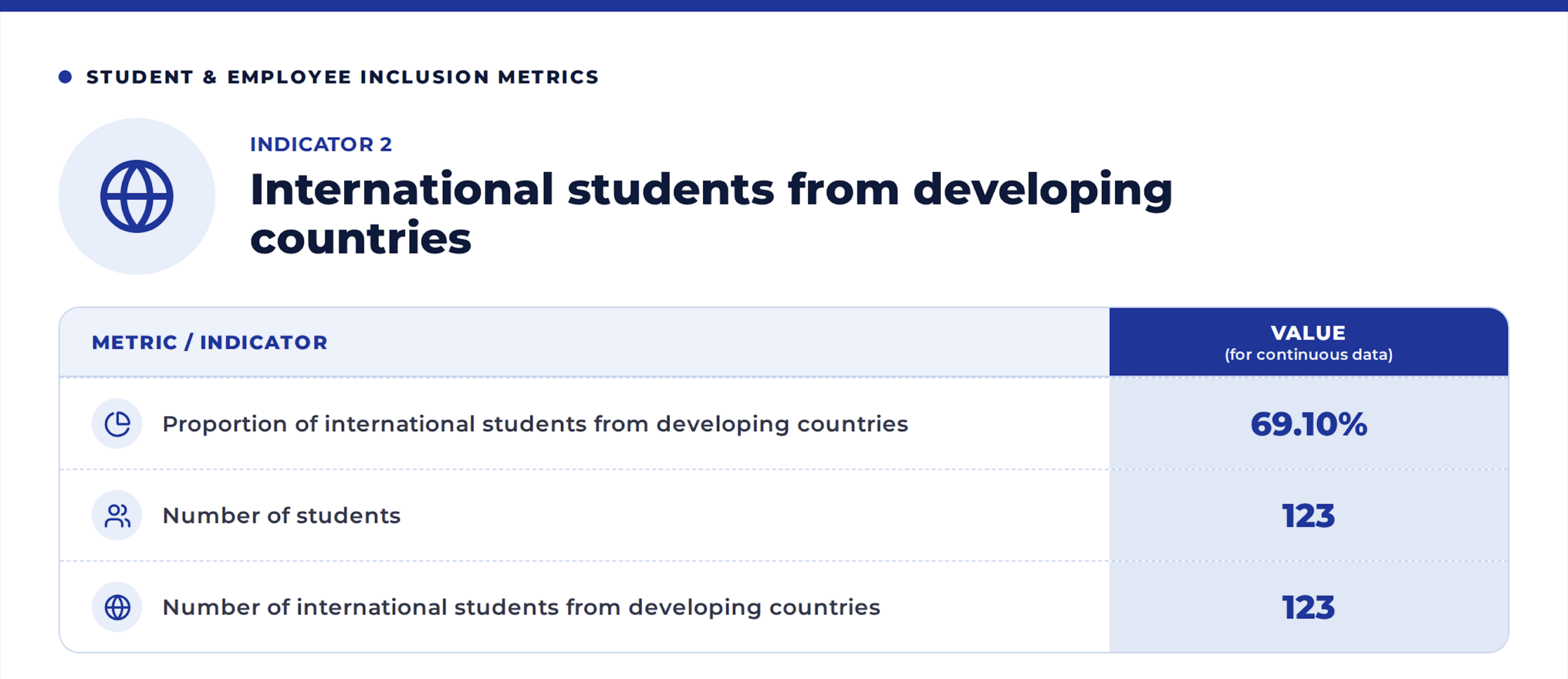
ALU attracts a diverse student body from across Africa and other developing regions, strengthening its mission to develop ethical and entrepreneurial leaders for the continent and beyond. Of the international student population in May 2024-May 2025, 69.1% are from developing countries, reflecting the university’s commitment to expanding access to high-quality higher education for learners from emerging economies. This diversity enriches the learning environment by bringing together students with varied cultural, social, and economic perspectives, fostering cross-border collaboration and global citizenship.
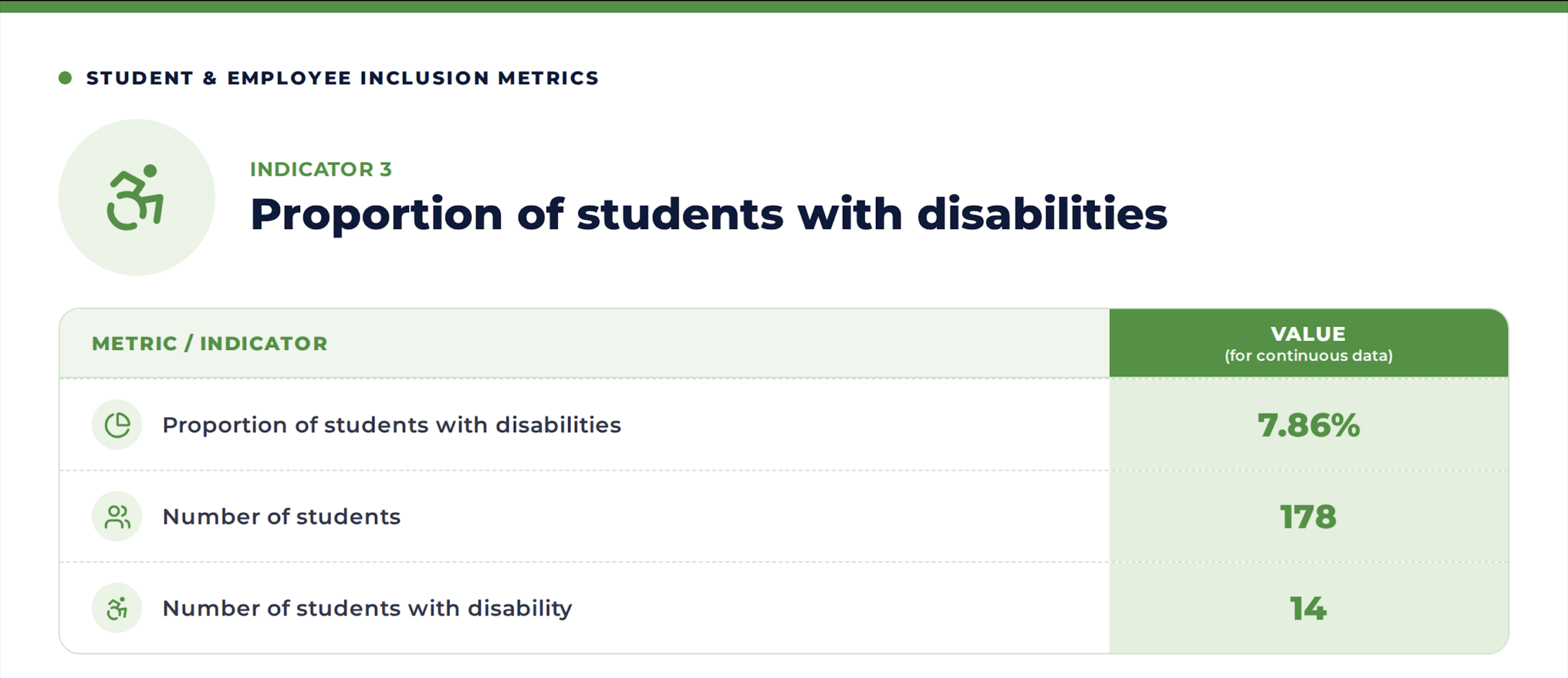
While students with disabilities represent a relatively small proportion of the student population, ALU is committed to ensuring that they can fully participate in university life through inclusive policies, accessible learning environments, reasonable accommodations, and student support services.
Monitoring disability data enables the university to identify opportunities to strengthen accessibility, remove barriers to participation, and continuously improve the student experience. These efforts contribute to the achievement of SDG 10.4 by promoting equal opportunities and supporting the inclusion of persons with disabilities in higher education.
ALU is committed to fostering a diverse, equitable, inclusive, and respectful learning and working environment where all students, faculty, and staff have equal opportunities to thrive. The university complements these commitments with practical support measures, including mentoring, counseling, peer support, disability services, accessible campus facilities, reasonable accommodations, and targeted interventions that enable all members of the university community to participate fully in academic and campus life. Together, these measures reinforce ALU’s commitment to eliminating barriers, promoting equal opportunity, and creating a safe and inclusive environment where every individual is respected, valued, and empowered to succeed.
ALU campus accessibility guide:
ALU provides accessible facilities for people with disabilities to ensure everyone can access campus and utilize the facilities safely.
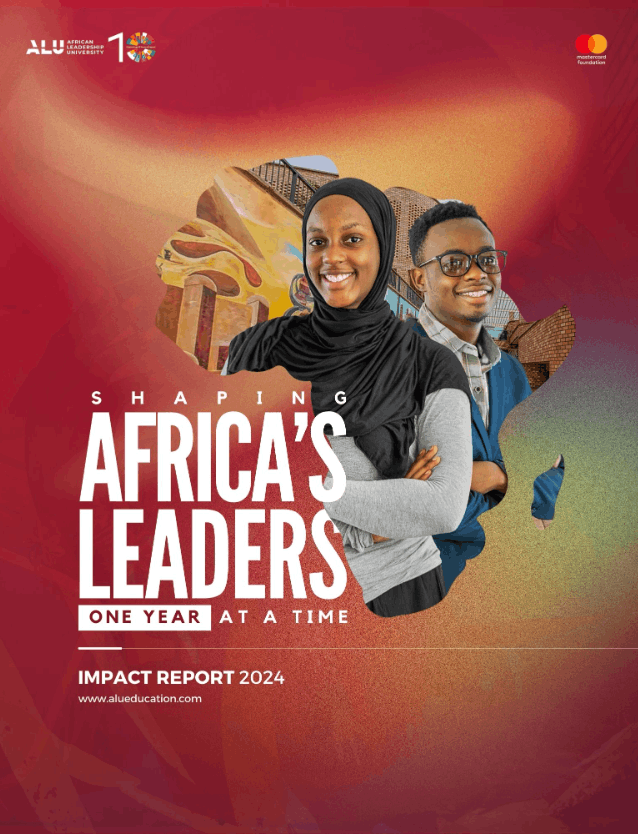
ALU is committed to reducing inequalities through its inclusive education model. This report presents evidence of equitable access, student and alumni success, scholarship programmes, leadership development, entrepreneurship, and social impact across diverse and historically underrepresented communities. By publicly reporting these outcomes, ALU demonstrates accountability, transparency, and the tangible impact of its initiatives to expand opportunity and foster inclusive development across Africa.