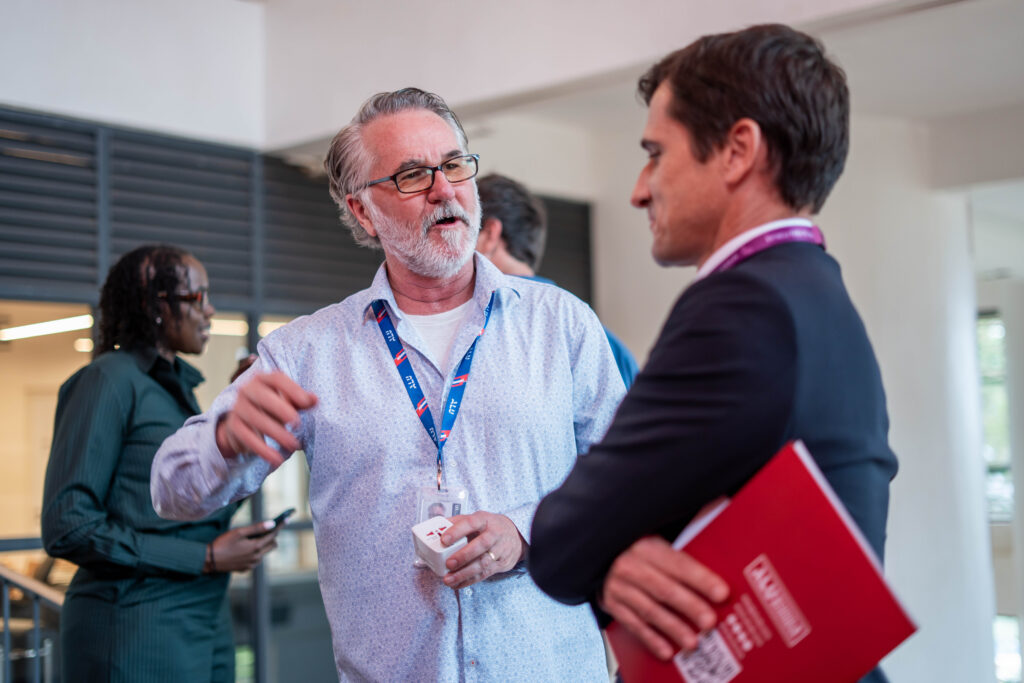
On May 14, the African Leadership University (ALU), in partnership with Dalberg Advisors, hosted an experiential convening on Shaping Africa’s Workforce in the Age of AI, bringing together leaders, educators, employers, policymakers, and students to engage with one of the continent’s most pressing questions: how Africa prepares its people to lead in a world increasingly shaped by artificial intelligence.
Designed as an interactive experience rather than a traditional conference, the event invited participants to step into future workforce scenarios through a hiring market simulation exploring how AI may reshape employability, leadership, and talent development across the continent.
Throughout the experience, participants were challenged to confront uncertainty, rethink leadership under pressure, and consider how emerging technologies are changing the skills, mindsets, and systems required for success. Conversations focused on adaptability, problem-solving, digital fluency, and the growing need for leadership approaches capable of navigating rapid technological and economic change.
The gathering reflected ALU’s broader role as a pan-African institution creating spaces where education, industry, policy, and young talent can come together to test ideas, challenge assumptions, and explore practical pathways for Africa’s future of work.
The event featured contributions from Sidee Dlamini, Chief Executive Officer of ALU, and Elizabeth Tolu Ojo, Dean of Undergraduate Programs at ALU, alongside facilitators and participants from across sectors. Discussions emphasized that preparing for the future of work requires more than technical skills alone; it demands collaboration, adaptability, and a commitment to developing leaders capable of shaping change rather than simply responding to it.
As artificial intelligence continues to transform industries and economies around the world, the conversations reinforced a central theme: the question is no longer whether change is coming, but whether Africa is prepared to lead it. Through collaboration across education, industry, and policy, institutions and organizations have an opportunity to help shape a workforce equipped not only to navigate technological disruption, but to drive innovation and create new possibilities for the continent’s future.